Design Sprint

UI/UX Design

Team Project

Role

UI UX Designer

Interviewer

Duration

2 weeks

Tools

Figma, Adobe Firefly

Zoom, Slack

Team

4 members

Overview
Get teenagers motivated to keep healthier habits without any pressure

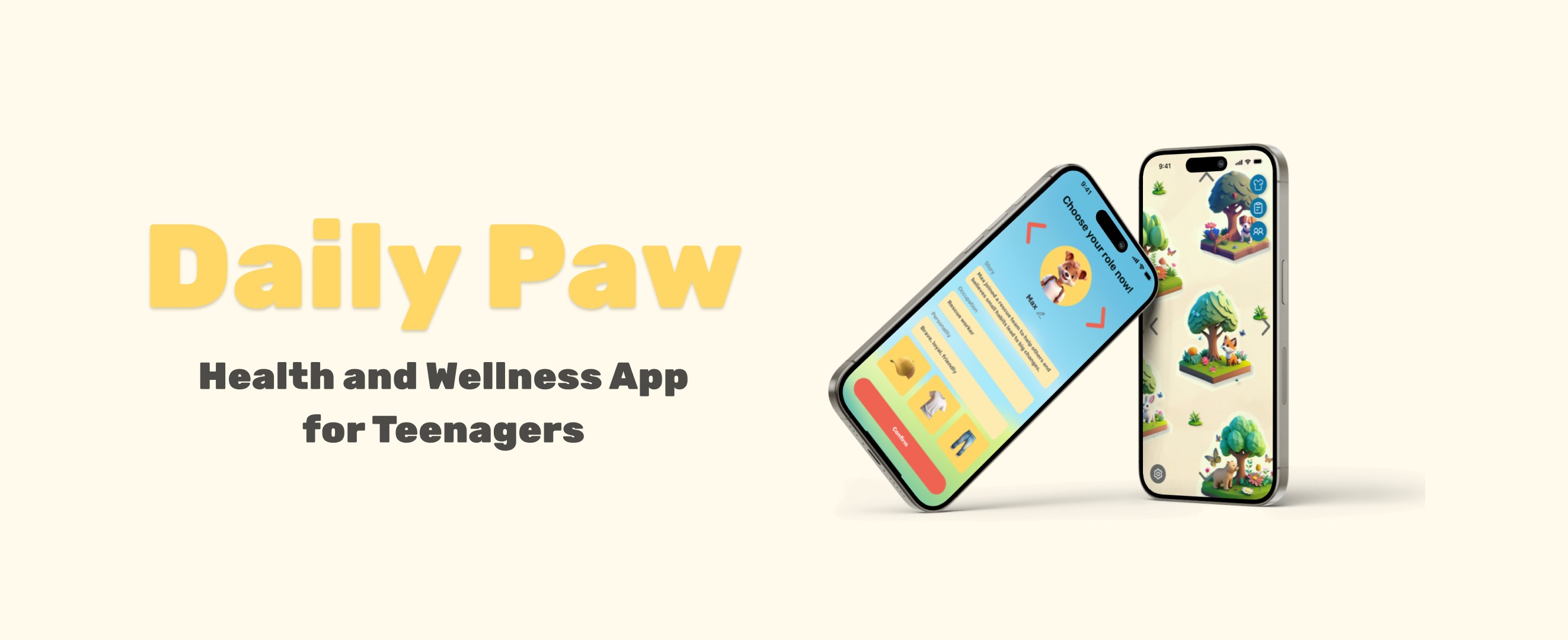
This project aimed to create the habit tracking app, helping teenagers to manage their daily routine through gamification feature. Our target audience is teenagers aged 13-17, struggling to focus on their school works easily distracted by social media. As a UI UX Designer and interviewer, I contributed to research competitors, create mood board, mock-up and conduct usability testing. The project followed a design sprint process from research, ideate, wireframe, prototype and usability testing.

Problem Statement

Create a health and wellness app that encourages teenagers to adopt healthier habits by addressing their lack of motivation and engagement with existing apps.

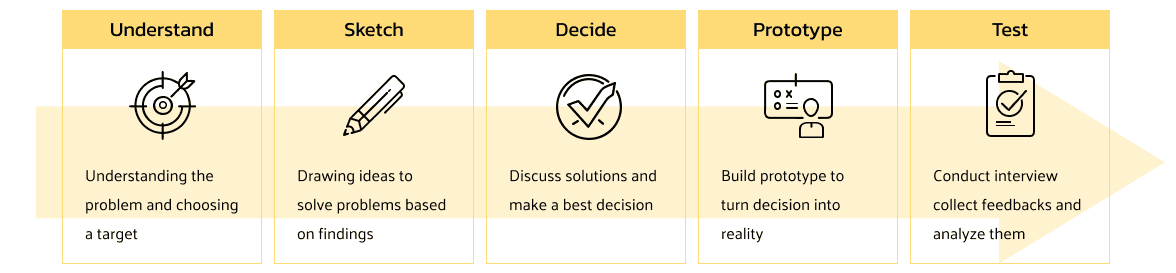
Process of Design Sprint
  1. Understand
Desk Research

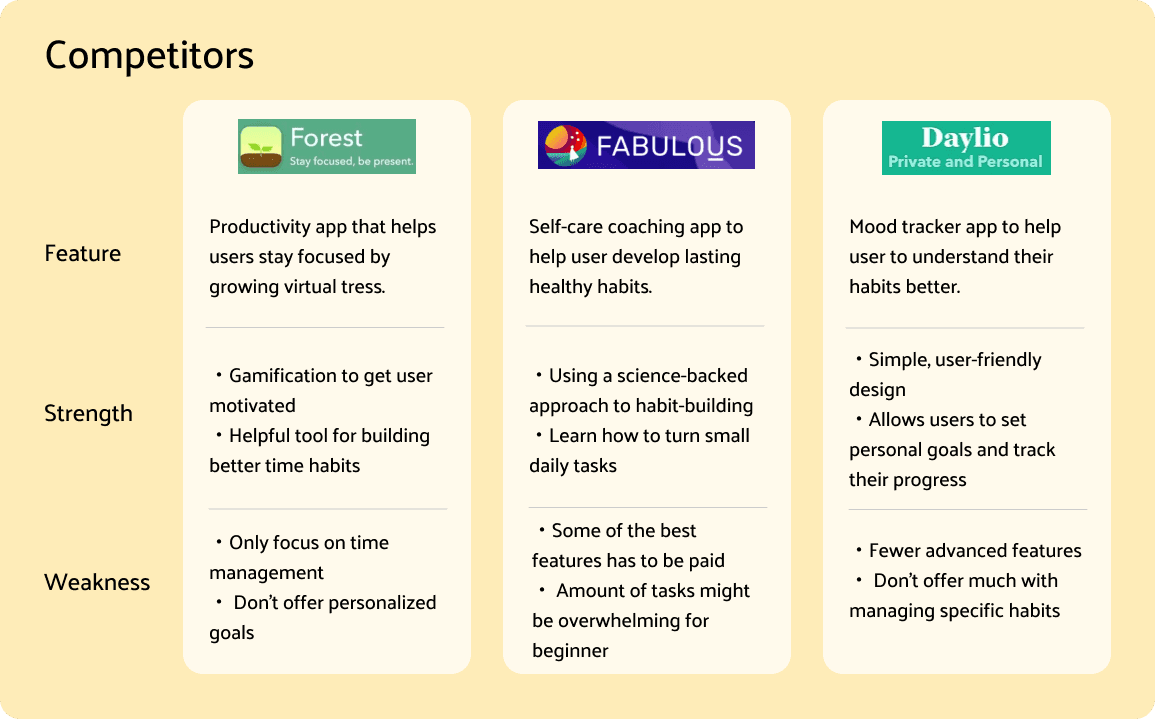
Based on the scenario, our initial step was to conduct research to gain a deeper understanding of our target users' needs and behaviors. We explored common issues teenagers face, such as spending excessive time on social media and struggling with time management.

According to the article, our desk research found that teenagers spend an average of 8 hours 39 minutes per day on screens.

Based on the scenario, our initial step was to conduct research to gain a deeper understanding of our target users' needs and behaviors. We explored common issues teenagers face, such as spending excessive time on social media and struggling with time management.

Through our desk research, we found that teenagers spend an average time of 8 hours 39 minutes per day on screens according to article.

  1. Understand
Desk Research

Based on the scenario, our initial step was to conduct research to gain a deeper understanding of our target users' needs and behaviors. We explored common issues teenagers face, such as spending excessive time on social media and struggling with time management.

According to the article, our desk research found that teenagers spend an average of 8 hours 39 minutes per day on screens.

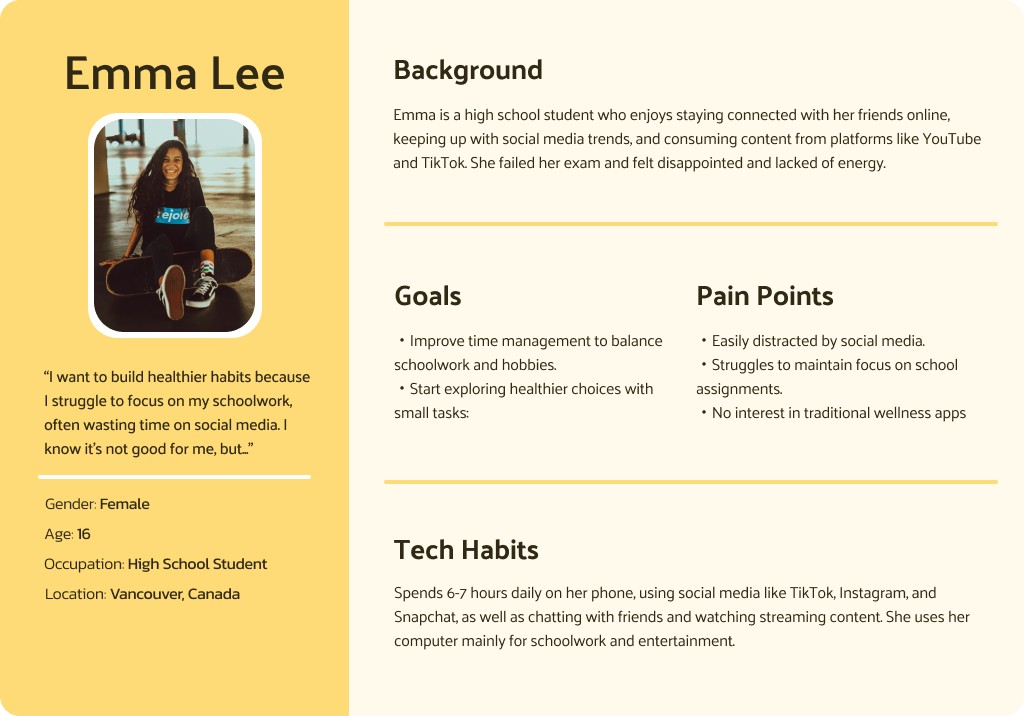
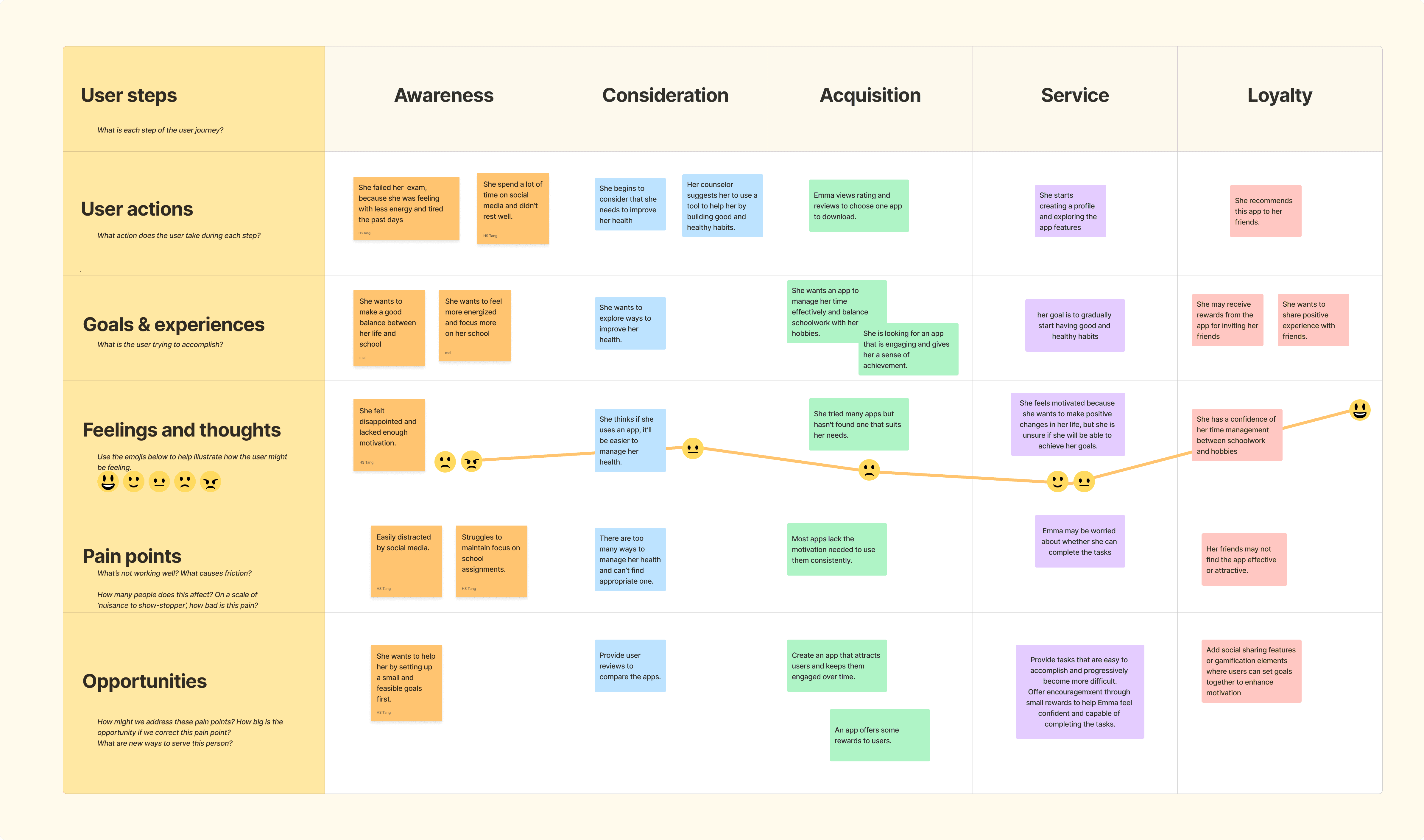
With all information we collect, we created a persona and user journey map to better understand our users' challenges and motivations. This led us to define key "How might we?" questions, focusing on how to encourage teens to manage their time better and adopt healthier habits in a fun and engaging way.

With all information we collect, we created a persona and user journey map to better understand our users' challenges and motivations. This led us to define key "How might we?" questions, focusing on how to encourage teens to manage their time better and adopt healthier habits in a fun and engaging way.

With all information we collect, we created a persona and user journey map to better understand our users' challenges and motivations. This led us to define key "How might we?" questions, focusing on how to encourage teens to manage their time better and adopt healthier habits in a fun and engaging way.

  1. Sketch
Sketch Out Ideas Visually

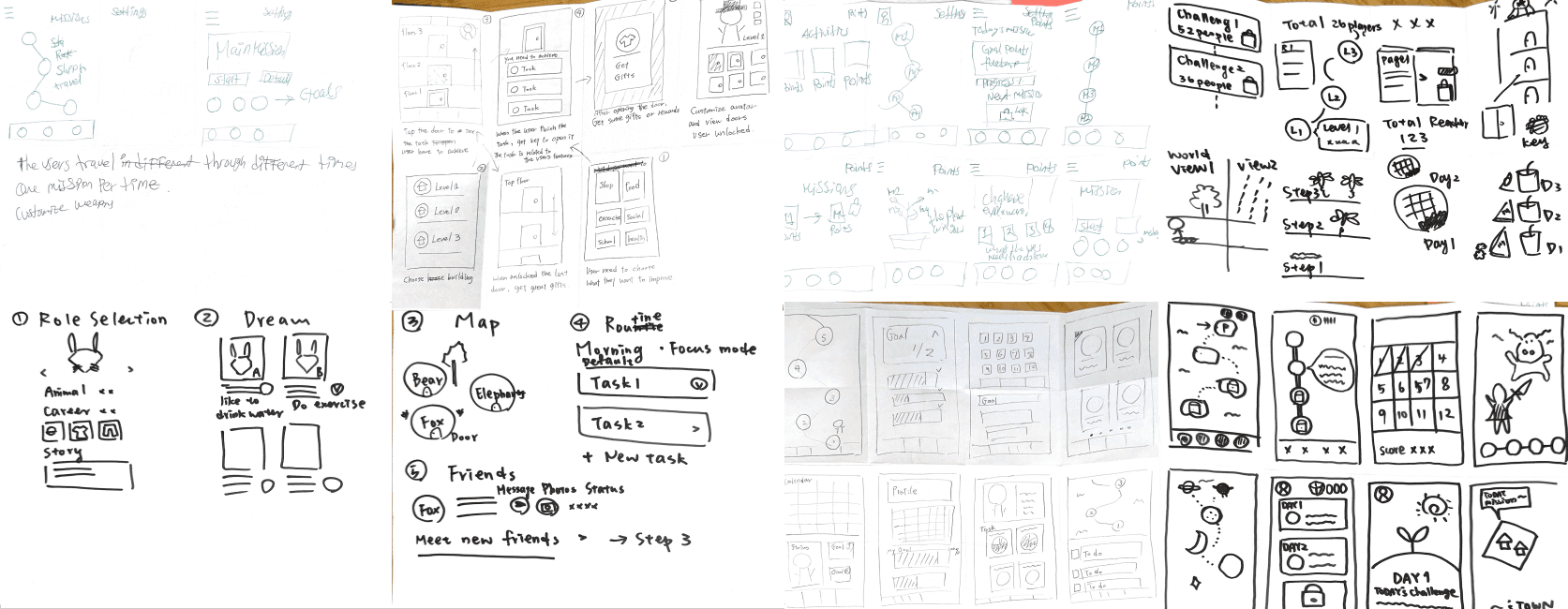
After understanding the problem and our target audience, we moved on to the sketch phase. We focused on turning research insights into practical design concepts by brainstorming through quick sketches such as Ideas, Crazy 8s and Solution sketch.

After understanding the problem and our target audience, we moved on to the sketch phase. We focused on turning research insights into practical design concepts by brainstorming through quick sketches such as Ideas, Crazy 8s and Solution sketch.

After understanding the problem and our target audience, we moved on to the sketch phase. We focused on turning research insights into practical design concepts by brainstorming through quick sketches such as Ideas, Crazy 8s and Solution sketch.

  1. Decide
Decide on the Best Solution

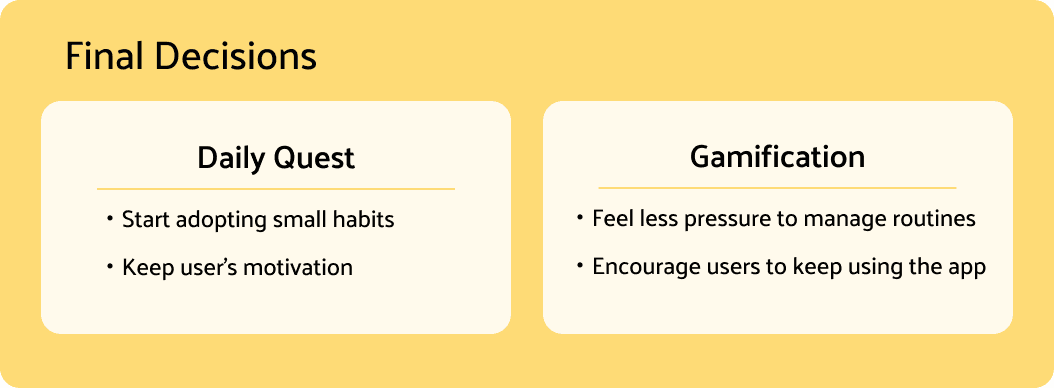
After brainstorming and coming up with several ideas, we needed to choose one solid plan. We used heat mapping and straw polls to help us identify the best option. To ensure our chosen idea fit well with our target audience, we then created a storyboard, mapping out the user journey.

After brainstorming and coming up with several ideas, we needed to choose one solid plan. We used heat mapping and straw polls to help us identify the best option. To ensure our chosen idea fit well with our target audience, we then created a storyboard, mapping out the user journey.

After brainstorming and coming up with several ideas, we needed to choose one solid plan. We used heat mapping and straw polls to help us identify the best option. To ensure our chosen idea fit well with our target audience, we then created a storyboard, mapping out the user journey.

  1. Prototype
Turn Best Solutions into a Realistic Prototype
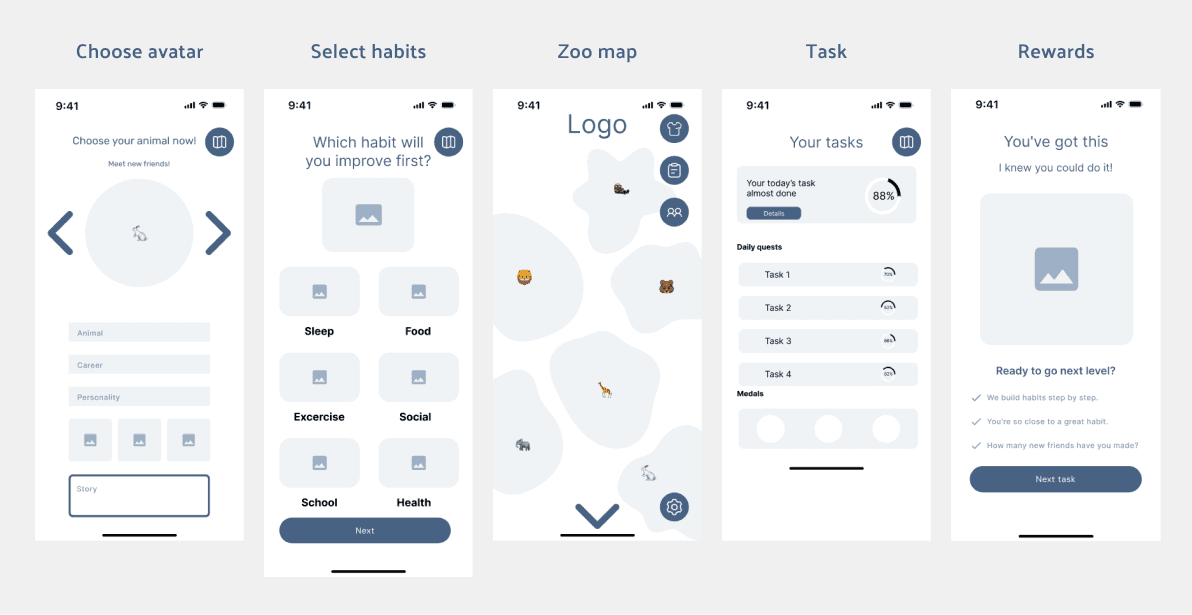
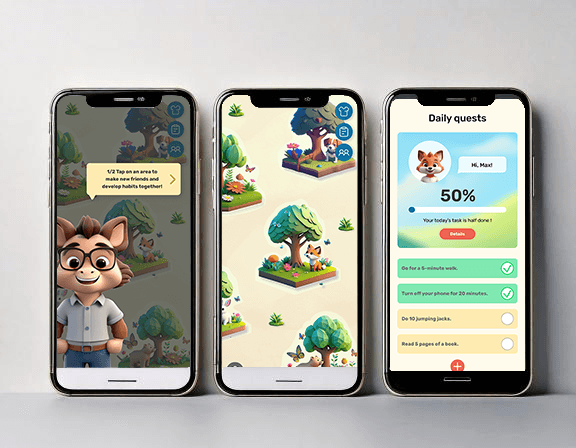
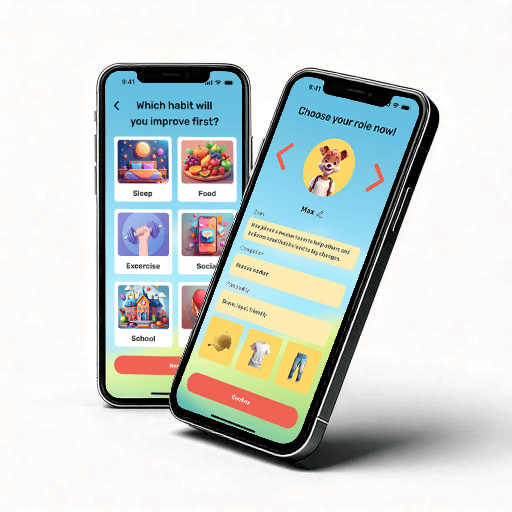
The goal of this phase is to create wireframe, mock-up and prototype that can validate our solution. Firstly, we divide tasks into creating mood board / UI kits and wireframe. with Figma. Once we got done these tasks, we started mock-up and prototype together. At this stage, Adobe Firefly helped us a lot to generate avatars and icons.

The goal of this phase is to create wireframe, mock-up and prototype that can validate our solution. Firstly, we divide tasks into creating mood board / UI kits and wireframe. with Figma. Once we got done these tasks, we started mock-up and prototype together. At this stage, Adobe Firefly helped us a lot to generate avatars and icons.

The goal of this phase is to create wireframe, mock-up and prototype that can validate our solution. Firstly, we divide tasks into creating mood board / UI kits and wireframe. with Figma. Once we got done these tasks, we started mock-up and prototype together. At this stage, Adobe Firefly helped us a lot to generate avatars and icons.

  1. Test
Conduct Usability Testing of Prototype
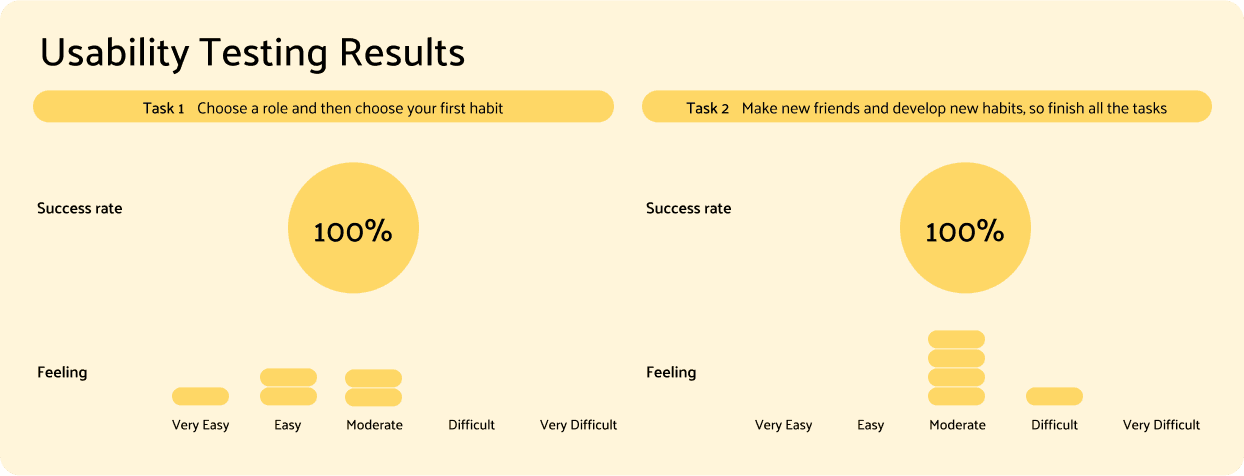
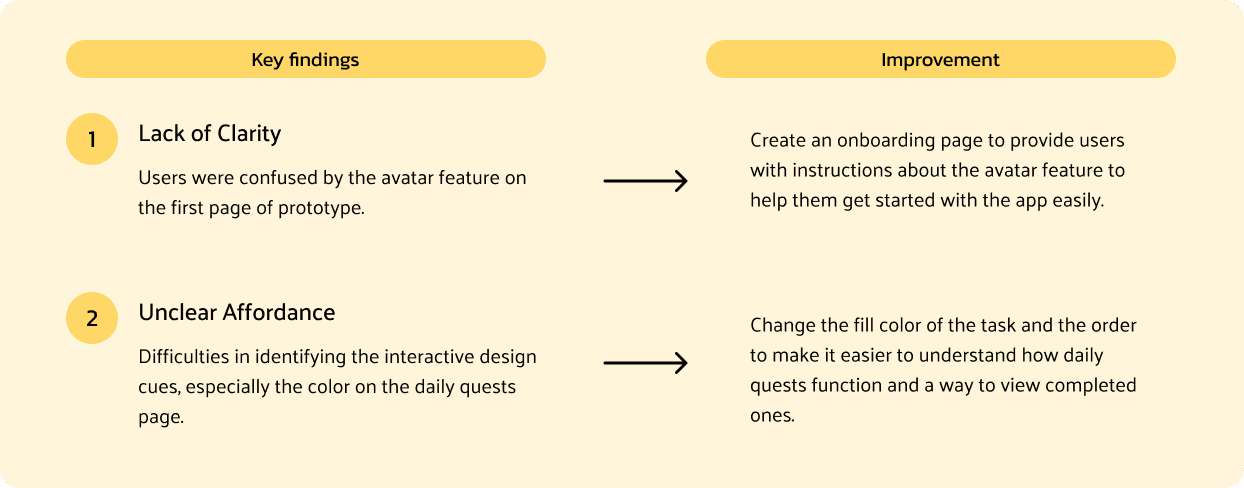
On the test day, Before starting it, we divide our roles into interviewer, note taker, recorder and monitor. Then, our team went to public library and ESL school to find the participants. As an interviewer, I conducted usability testing of 2 tasks and 4 questions with 5 students (1 online), aged at 15-18. This testing helped us to receive valuable feedbacks and helpful comments.

On the test day, Before starting it, we divide our roles into interviewer, note taker, recorder and monitor. Then, our team went to public library and ESL school to find the participants. As an interviewer, I conducted usability testing of 2 tasks and 4 questions with 5 students (1 online), aged at 15-18. This testing helped us to receive valuable feedbacks and helpful comments.

On the test day, Before starting it, we divide our roles into interviewer, note taker, recorder and monitor. Then, our team went to public library and ESL school to find the participants. As an interviewer, I conducted usability testing of 2 tasks and 4 questions with 5 students (1 online), aged at 15-18. This testing helped us to receive valuable feedbacks and helpful comments.

Takeaways

Design Sprint Challenges and Teamwork

  • Successfully completed design sprint process within limited time.


  • Teamwork and organization maintained.


  • Learned design sprint flow.


  • Used 4-step sketch for solution writing.

  • Active participation and diverse perspectives pushed project forward.


  • Strengthened design sprint skills and emphasized collaboration and diverse perspectives.


  • Looking forward to applying insights to future projects.